Ultimate Ninjas Children's Book coming to Amazon on Aril 24th!



Ninja Classes for Kids Ages 3 to 7: Building Confidence Through Movement
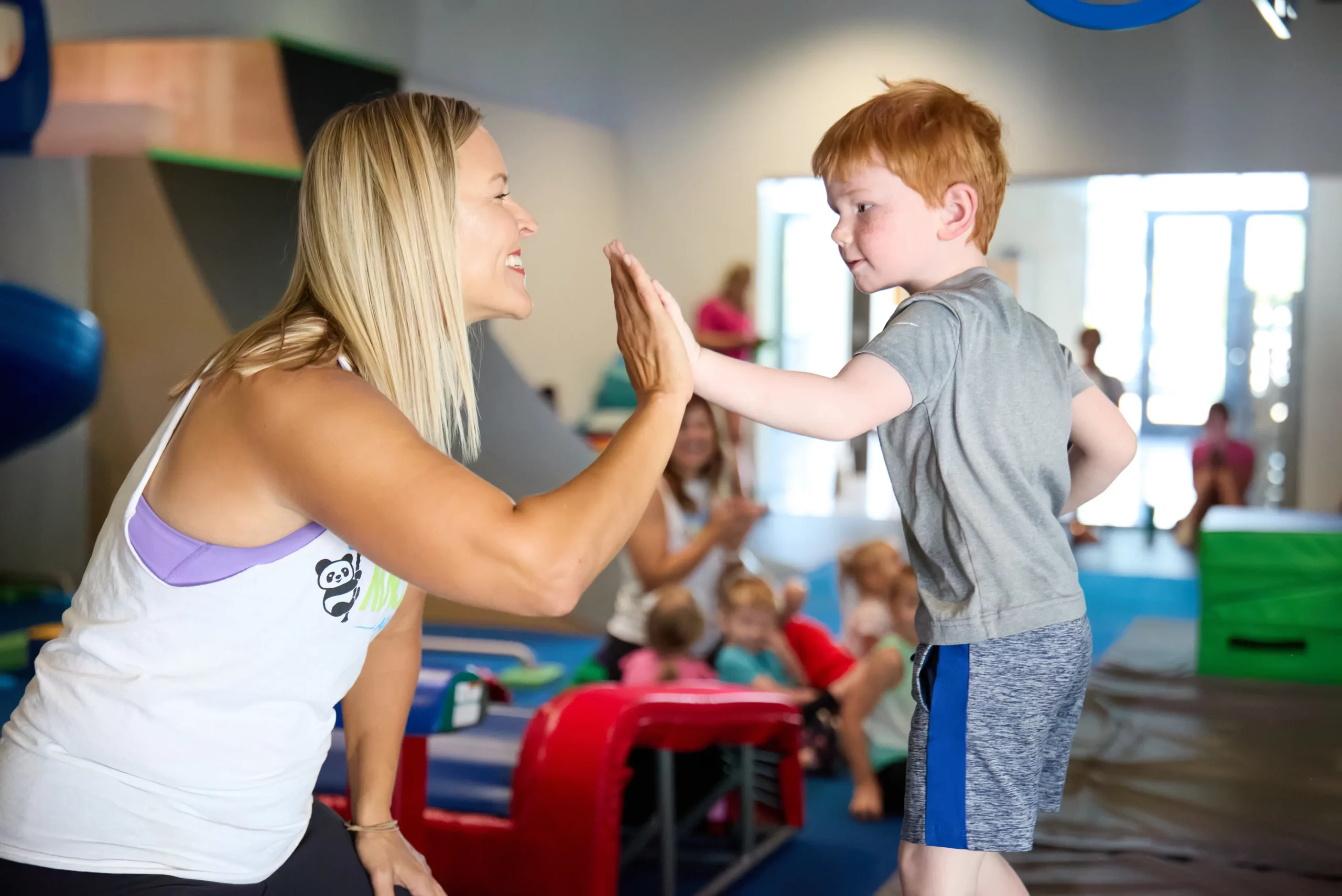
Ninja classes for ages 3 to 7 focus on the basics of moving well: balance, grip strength, coordination, and the confidence to try something that looks hard. Here is what a class involves and what to expect in the first few months.
Table of Contents
Why Ages 3 to 7 Are the Right Window
Between three and seven, kids are building the movement patterns they will use for the rest of their lives. Balance, spatial awareness, grip strength, and the ability to plan a movement before making it all develop quickly during these years.
What makes this window useful is not that kids get stronger. It is that they are still forming their idea of what they are capable of. A five year old who learns that a hard thing gets easier with practice carries that somewhere else. A five year old who decides early that they are not athletic tends to carry that too.
Obstacle training works well here because the challenge is visible and the progress is obvious. A kid can see the bar they could not reach last month. There is no ambiguity about whether they improved.
What a Class Actually Looks Like
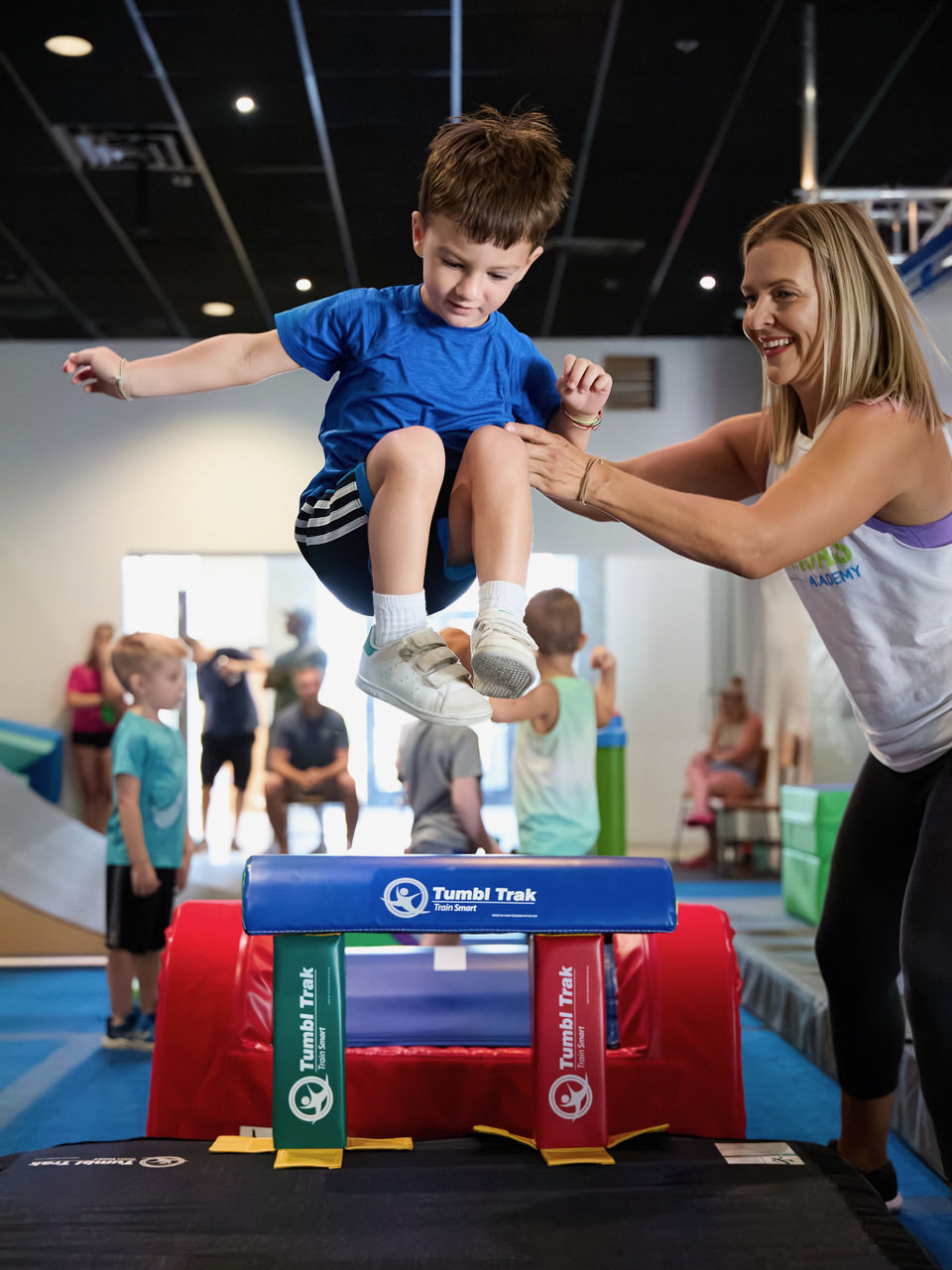
Classes for this age group generally run 45 minutes to an hour and follow a consistent structure. Consistency matters here. Kids settle faster when they know what comes next.
Warm up
Five to ten minutes of movement games. Animal walks, running patterns, jumping. The point is to get bodies ready and to give coaches a look at how each kid is moving that day.
Skill work
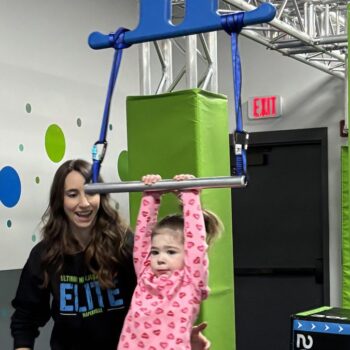
The coach introduces one or two focus skills for the day. It might be hanging and swinging, landing safely from a jump, or moving across a balance element without looking down. Kids work in small groups so they get individual attention.
Obstacle application
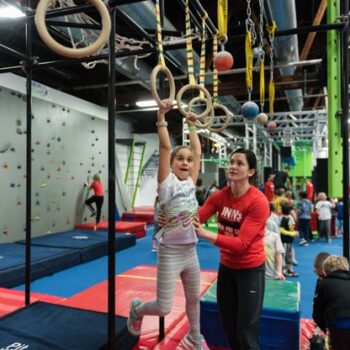
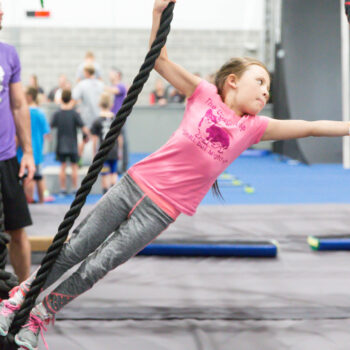
The skill gets applied on the course. This is where kids connect the drill to something that feels like play. A kid who spent ten minutes practicing a grip is now using it to cross a set of rings.
Challenge and cool down
The class ends with a course run or a game, then a short cool down. Coaches usually finish by naming something specific each kid did well, which lands better than general praise.
The Skills Kids Build
Ultimate Ninjas classes are built around The Twelve Pillars, the curriculum framework that organizes what kids work on and in what order. For this age group, the early pillars get the most attention.
| Skill area | What it looks like in class | Why it matters |
|---|---|---|
| Balance | Beams, low bars, uneven surfaces | Foundation for nearly every other skill |
| Grip strength | Hanging, swinging, holding bars | Needed before any upper body obstacle |
| Coordination | Multi step obstacle sequences | Connecting movements into one motion |
| Body awareness | Landing, falling safely, tucking | Reduces injury and builds confidence |
| Agility | Quick direction changes, footwork | Transfers to every sport |
| Persistence | Repeating an obstacle until it works | The skill that outlasts the others |
The last one is what parents mention most. Kids fail obstacles constantly in this environment, and because everyone around them is also failing obstacles, it stops feeling like failure. It starts feeling like the process.
How Coaches Adapt for Different Levels
A class at this age will have a wide range of ability. Some kids have done gymnastics. Some have never hung from a bar. Coaches handle this by scaling the same obstacle instead of splitting the group.
- Height gets adjusted. The same hanging obstacle can sit low enough that a three year old can reach it with a small hop.
- Support gets added or removed. A coach might hold a hand on the first attempt and step back on the third.
- The number of steps changes. A confident kid does the full sequence. A newer kid does the first two elements and stops there.
- The goal changes. For one kid the goal is crossing the beam. For another it is crossing it without looking at their feet.
The result is that everyone in the class is working at the edge of what they can do, which is where kids actually improve and where they stay interested.

What Progress Looks Like Over Time
Parents often ask how long before they see something. Here is a rough timeline, and it varies by kid.
| Timeframe | What usually changes |
|---|---|
| First 2 to 3 classes | Kid learns the routine, gets comfortable with coaches, tries most obstacles |
| First month | Noticeable grip and hanging improvement, less hesitation before trying |
| 2 to 3 months | Completing obstacles that were impossible on day one, asking to practice at home |
| 6 months | Real strength gains, better balance, ready to move up to a more advanced group |
Class levels and the criteria for moving up are set by each location. Check your location’s class page to see how the levels are structured there.
What Parents Notice at Home
The gym changes are easy to see. The ones outside the gym come up more often in conversation.
- Kids climb more confidently on playground equipment and fall less.
- They try things without asking whether they are allowed to fail first.
- They sleep better on class days.
- They find something they are good at that is not tied to a team or a score.

Frequently Asked Questions
Is my child too young to start?
Structured classes generally start around age three. Below that, a parent and child class is usually the better entry point. Minimum ages vary by location, so check your location’s class page.
What if my child is shy or hesitant?
Common, and coaches expect it. Hesitant kids usually spend the first class or two watching more than doing, and that is fine. Nobody gets pushed onto an obstacle.
Does my child need to be athletic already?
No. A large share of kids in these classes are not doing another sport. That is often why they are here.
What should they wear?
Athletic clothes with no zippers or buttons, hair tied back, no jewelry. Footwear requirements vary by location, so check before the first class.
How many kids are in a class?
Class sizes and coach to child ratios are set by each location. It is a fair question to ask when you call, and any gym should answer it directly.
Can I watch?
Yes. There is viewing area seating. Some kids do better when a parent is out of sight, and coaches will tell you if that seems to be the case.
What if we miss a class?
Makeup policies are set locally. Ask your location before you enroll so you know how missed weeks are handled.
Find Classes Near You
The easiest way to know if this fits your child is to watch one class. Most kids know within the first fifteen minutes whether they like it. Pick your location below to see current class times and age groups.
About the Author
These articles are written by the coaching team at Ultimate Ninjas. Our curriculum is developed by experts in youth athletic development, combining principles of biomechanics, sports psychology, and motor learning. With years of experience on the mats, we are committed to providing science-backed, safe, and effective training methods for every child.
Disclaimer: The information provided in these blog posts is for educational and informational purposes only and does not constitute professional medical advice, diagnosis, or treatment. Always seek the advice of your physician or other qualified health provider with any questions you may have regarding a medical condition or physical training.

About the Author
These articles are written by the coaching team at Ultimate Ninjas. Our curriculum is developed by experts in youth athletic development, combining principles of biomechanics, sports psychology, and motor learning. With years of experience on the mats, we are committed to providing science-backed, safe, and effective training methods for every child.